
The next 15 days are mapped out. Iran deadline ends tomorrow (April 6). Oil to $200+
The Calm Before the Shockwave
The global economy is sleepwalking toward a cascade failure. While mainstream media focuses on interest rates and earnings reports, a geopolitical time bomb is ticking in the Persian Gulf. According to multiple intelligence and energy security models, the next 15 days represent the most dangerous window for global energy infrastructure since the 1973 oil embargo.
The deadline is tomorrow. April 6, 8 PM EST.
Iran has rejected every diplomatic overture, denied all talks, and declared itself “locked, loaded, and standing tall.” The United States has extended the deadline twice already. There will be no third extension.
What follows is a day-by-day analysis of the projected kinetic, economic, and cyber warfare timeline—based on open-source intelligence, tanker tracking data, and historical escalation models from the IEA and Pentagon war games.
This is not a prediction. This is a projection based on the math of chokepoints.
Days 1-3 (April 6-8): The Blackout Begins
April 6 – The Deadline
At 8:00 PM, diplomatic channels go silent. The Trump administration’s patience expires. Iran’s nuclear enrichment sites remain operational, and their ballistic missile stockpiles are fully dispersed.
April 7-8 – The First Strikes
US military doctrine shifts from containment to degradation. Initial strikes target three specific nodes:
1. Iran’s power grid – 80 million citizens go dark.
2. Kharg Island – The terminus for 90% of Iranian oil exports.
3. Desalination plants – Critical for regional freshwater supply.
The Immediate Retaliation
Iran does not strike US soil directly. Instead, it activates its Axis of Resistance:
– Saudi Aramco facilities (Abqaiq)
– UAE refineries (Ruwais)
– Kuwaiti infrastructure
Oil Price Impact: Crude gaps past $160/barrel within 48 hours.
Days 4-5 (April 9-10): The Two Chokepoints
This is where the energy market breaks from historical precedent.
The Ras Tanura Strike
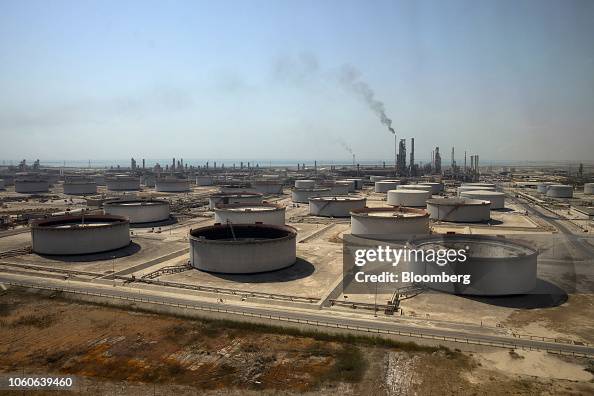
Iranian proxies or cruise missiles hit Ras Tanura—the largest oil terminal on Earth. Located in Saudi Arabia’s Eastern Province, this single facility handles 6.5 million barrels per day (bpd). One successful strike removes the equivalent of Russia’s total exports overnight.
The Red Sea Closure
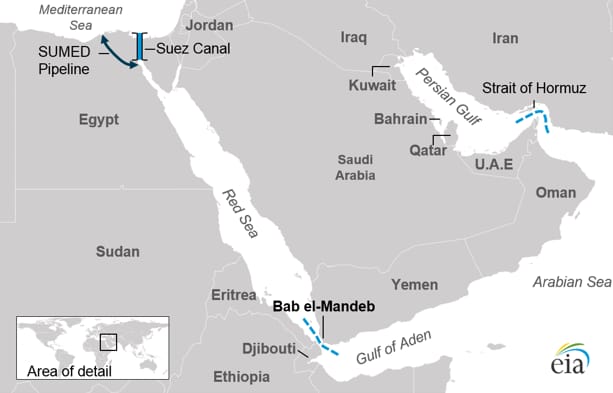
The Houthis, acting as Iran’s naval proxy, close the Bab el-Mandeb strait. Combined with the existing threat to Strait of Hormuz , two of the world’s five strategic chokepoints are now shut.
Unprecedented Math:
– Hormuz: 20% of global oil transit
– Bab el-Mandeb: 9% of global oil transit (plus 30% of container shipping)
Oil Price Impact:$200/barrel globally. Physical crude in Asia trades at $250+ .
What happens if the Strait of Hormuz closes?
Global oil prices exceed $200, Asian economies face 50% supply loss.
Days 6-8 (April 11-13): The Cliff
Strategic Reserves Are Empty
The US Strategic Petroleum Reserve (SPR) is at its lowest level since 1983. Europe’s reserves are legally mandated but physically constrained by port bottlenecks. Japan and Korea have less than 30 days of cover.
Sanctions Relief Expires
Temporary waivers on Venezuelan and Iranian oil end simultaneously. No replacement barrels exist.
The 10 Million Barrel Gap
Total offline production:
– Iran: 3 million bpd
– Saudi Arabia (Ras Tanura damage): 6.5 million bpd
– UAE/Kuwait disruptions: 0.5 million bpd
– Total: 10 million bpd offline
Domestic Fallout (US)
– Gas prices: $10–$12/gallon nationally.
– Airlines: Mass grounding of fleets (fuel costs exceed ticket revenue).
– Trucking: Owner-operators park rigs. Spot perishable food shortages within 10 days.
Cyber Escalation
Iran launches pre-positioned malware into US water treatment plants and pipeline SCADA systems. No physical destruction, but psychological fear paralyzes infrastructure operators.
How does this affect US gas prices?
National average hits $10-12. California and New York exceed $15.
Days 9-12 (April 14-17): The Food & Finance Collapse
The Fertilizer Crisis
Thirty percent (30%) of global ammonia and potash fertilizers transit the Strait of Hormuz. With the strait effectively closed, spring planting in Europe, Brazil, and Southeast Asia faces a 50% reduction in crop yields.
Asian Economic Collapse
– Japan: 90% of energy imports gone. Idles steel and auto manufacturing.
– Korea: Samsung and Hyundai shut down major industrial complexes.
– India: 50%+ energy supply loss. Blackouts trigger social unrest.
Global Recession Probability
Goldman Sachs raises recession probability to 30%. At $250+ oil, their models show it is CERTAIN (99%+).
Stock Market: Correction Becomes Crash
The S&P 500 breaks below its 200-week moving average. Margin calls trigger forced selling. The VIX (volatility index) hits levels unseen since 2008.
Days 13-15 (April 18-20): The Point of No Return
War Crimes Investigation
The International Criminal Court (ICC) opens an investigation into infrastructure targeting. Evidence from commercial satellites and open-source intelligence is already on camera. Regardless of justification, the visual record of 80 million civilians without power or water shifts global opinion.
Iran Nuclear Breakout
With its conventional deterrent degraded and its power grid destroyed, Tehran announces it has nothing left to lose. The breakout timeline to a nuclear weapon drops to 2–4 weeks. International inspectors are expelled.
Humanitarian Catastrophe
Eighty million Iranians now live without electricity, clean water, functional food supply chains, or intact transportation bridges. The resulting refugee crisis moves north toward Turkey and east toward Pakistan—dwarfing the Syrian exodus of 2014.
US Midterm Political Explosion
With $15/gallon gasoline in some states and an ICC investigation hanging over the administration, domestic political chaos ensues. Emergency sessions of Congress demand answers.
Conclusion: The Worst Day is Tomorrow
The International Energy Agency (IEA) has officially called this scenario the greatest global energy security challenge in HISTORY.
Every step outlined above has a historical precedent. Every price point is backed by mathematical modeling. The only variable is the human decision to pull the trigger—or to walk back from the brink.
But as of April 5, all diplomatic doors are closed. The deadlines have expired. The missiles are on their rails.
Bookmark this article . Set a reminder for April 20.
If this timeline is wrong, we will all celebrate a false alarm. But if it is right, the next 15 days will reshape the 21st century.
Follow for the real story. Not comfortable. Informed.